Material notes
What each material actually does
The numbers below are the ones that decide a design: insulation value, fire rating, thermal mass and where the material comes from.
Strawbale
A rendered straw wall is roughly three times as efficient as conventional framing, and the straw is a by-product of a food crop grown annually within a few hours of site.
- Wall R-value
- R-40
- Fire rating
- 2.5 hours
- Heating energy
- 50–80% less
How much energy does it actually save?
Heating and cooling energy runs 50% to 80% below conventional construction. Over a thirty-year mortgage that insulation can cut energy costs by up to 75%.
Is it a fire risk?
The opposite. A rendered straw bale wall gives a 2.5 hour fire rating — the render seals the bale so there is no oxygen to feed a flame.
What about termites and damp?
Straw is naturally resistant to most termite species, and the wall behaves like a living skin: it buffers humidity instead of trapping it.
Is it more expensive?
With the other resource-efficient elements that come with it, strawbale construction can land 10% to 25% below conventional construction.
What happens to the offcuts?
Nothing is wasted. Excess straw on site goes into the gardens.
Hempcrete
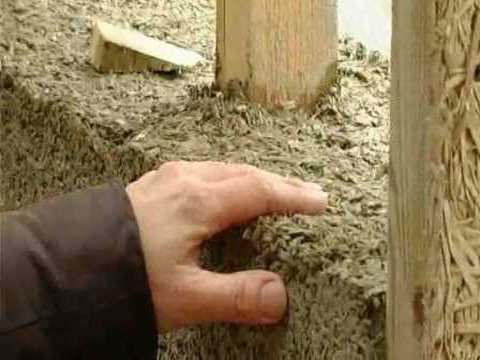
Hemp hurd, hydrated lime, sand and water, cast around a frame. The wall breathes, discourages mould, resists vermin, and keeps hardening for decades.
- Wall R-value
- R-15
- Fire rating
- 2.5 hours
- Carbon
- Negative in the wall
Why is it carbon negative?
The crop sequesters carbon as it grows and the lime keeps absorbing carbon dioxide as it cures, so the wall stores more than it cost to build.
How much land does a house take?
A three-month crop on one hectare produces enough hemp to build a 24 m² house and a small shed.
Does it handle humidity?
Hemp walls let moisture pass through rather than condense, which discourages mould and improves indoor air quality.
Is it noisy?
No — hemp walls have a high sound attenuation value, which is why they suit main roads and shared walls.
Can it be grown locally?
Yes. Changes to the law now allow commercial hemp farms in the Northern Rivers.
Bamboo and earth
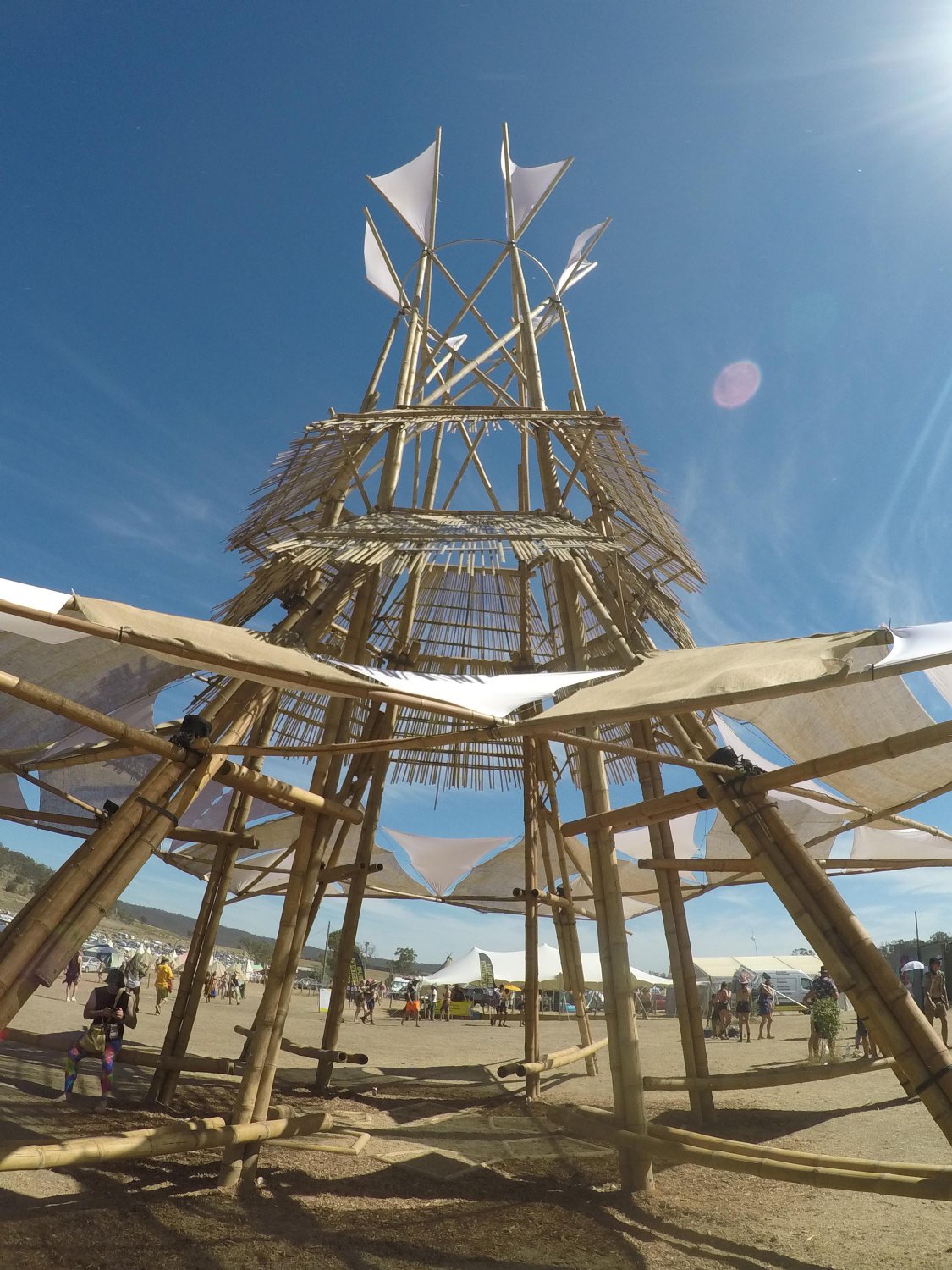
Bamboo for structures that have to span far and travel — lashed, not bolted. Rammed earth for mass, from the ground the building stands on.
- Bamboo growth
- Harvest in 3–5 years
- Connections
- Lashed, reusable
- Earth walls
- High thermal mass
Why bamboo?
It is a renewable grass with an extraordinary strength-to-weight ratio, capable of rapid growth — so a structure can span far without touching a rainforest.
How long do bamboo structures last?
Treated poles kept out of ground contact and under a roofline last decades. Lashed connections can be undone, so a structure can be dismantled and raised again.
What is rammed earth good for?
Thermal mass. An earth wall absorbs the day’s heat and gives it back at night, which flattens the temperature swing without a compressor.
Does earth need finishing?
No paint, no render. The wall is the finish, and the colour comes from the site.
Start here
Tell us about your site
Send the block, the brief and the budget. We will tell you honestly what is possible — and what it will cost to run once it is built.